2026-09-13 13:54:16
Why DNS History Checking Is Important for Domain Analysis
DNS history checking is an important part of domain analysis. It helps understand how a domain was used in the past, what technical changes happened over time, and whether there may be risks before using the domain again.
DNS history shows not only the current state of a domain, but also previous changes. This makes it possible to see whether the domain had stable usage, frequent technical changes, suspicious activity, or signs of being connected to low-quality networks.
What DNS History Lookup Is Used For
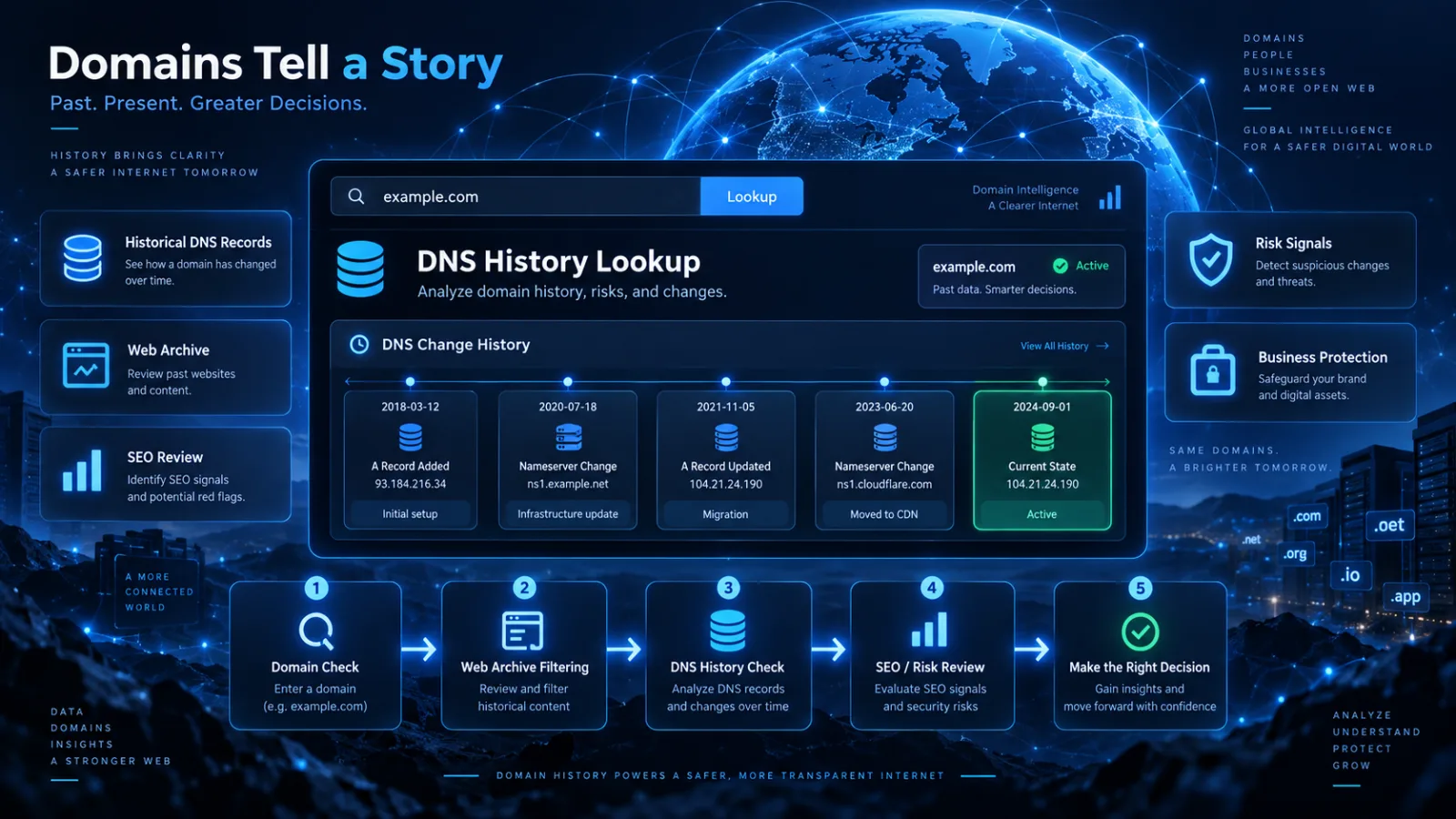
DNS history lookup is used to retrieve historical DNS records for a domain. It helps show what DNS data was associated with the domain in the past, how often it changed, and whether the domain has any suspicious technical signals.
This type of analysis is useful before buying, registering, restoring, or using a domain for SEO, business, cybersecurity research, or domain investment.
With a DNS history checker, users can better understand the technical background of a domain instead of relying only on its current state. Sometimes a domain may look clean today, while its previous DNS history can reveal risks that are not visible at first glance.
What Risks DNS History Can Reveal
Checking historical DNS records can help identify signals that may affect a domain’s reputation or future use.
A DNS history check can help reveal:
- frequent technical changes;
- periods of suspicious activity;
- connections with low-quality website networks;
- possible use in PBNs, doorway sites, or spam projects;
- sudden infrastructure or ownership changes;
- periods where the domain may have been active but was not captured in web archives;
- mismatches between web archive data, SEO data, and technical history.
This is important because web archive data or SEO metrics alone may not always provide a complete picture. DNS record history adds another layer of information and helps analyze the technical side of the domain.
How DNS History Is Useful in Different Areas
Drop Hunting
In drop hunting, DNS history helps understand whether a domain had real usage, whether its history looks natural, and whether there are signs of technical spam. This helps filter weak domains faster and focus only on domains that deserve deeper analysis.
DNS history for domain analysis is especially useful after the domain has already passed availability checks, web archive review, and basic SEO filtering. In this order, the tool provides more value and does not create unnecessary data noise.
SEO
For SEO, DNS history helps assess risks before using a domain for a new website, redirect, or restored project. If the technical history looks suspicious, it can be a signal to check backlinks, anchors, and content history more carefully.
Cybersecurity
In cybersecurity, historic DNS records can help investigate how a domain was used before, whether it was connected to suspicious activity, phishing, malicious pages, or temporary technical changes.
Business and Brand Protection
For businesses, checking DNS history is useful before buying a domain or launching a brand on an existing domain. It helps reduce the risk of using a domain with a bad reputation or unclear background.
Domain Analytics
For domain analysts, DNS change history helps track how a domain changed over time. This makes it easier to evaluate its quality, stability, and potential value.
How to Get a Good Result from DNS History Checking
To get a useful result, DNS history should not be analyzed separately. It works best when combined with other domain-checking steps.
Recommended workflow:
- Check whether the domain is available for registration or purchase.
- Review the domain’s web archive history.
- Filter out domains with obvious spam or unnatural history.
- Run a DNS history lookup for domains that passed the first checks.
- Compare DNS history with web archive and SEO data.
- Analyze backlinks, anchors, referring domains, and spam signals.
- Make the final decision based on the full picture.
This approach saves time and avoids wasting resources on random or low-quality domains. DNS history checking becomes most valuable when it is used at the right stage and supports other analysis tools.
A DNS history checker is not just a technical tool. It is an important part of complete domain analysis. It helps reveal information that may not be visible in web archives or SEO reports.
Checking historical DNS records helps evaluate a domain’s past, identify risks, understand DNS changes, and make a more informed decision.
That is why dns history check is useful for drop hunting, SEO, cybersecurity, business, and domain analytics. When used correctly, DNS history can help achieve better results and reduce risks before working with a domain.